
You check the staff. You check the food. Do you check the playground surface?
At Turfgreen Group, we believe wetpour rubber is one of the most overlooked safety features in early childhood care. Here’s what Roodepoort parents should know.
What Is Wetpour Rubber?
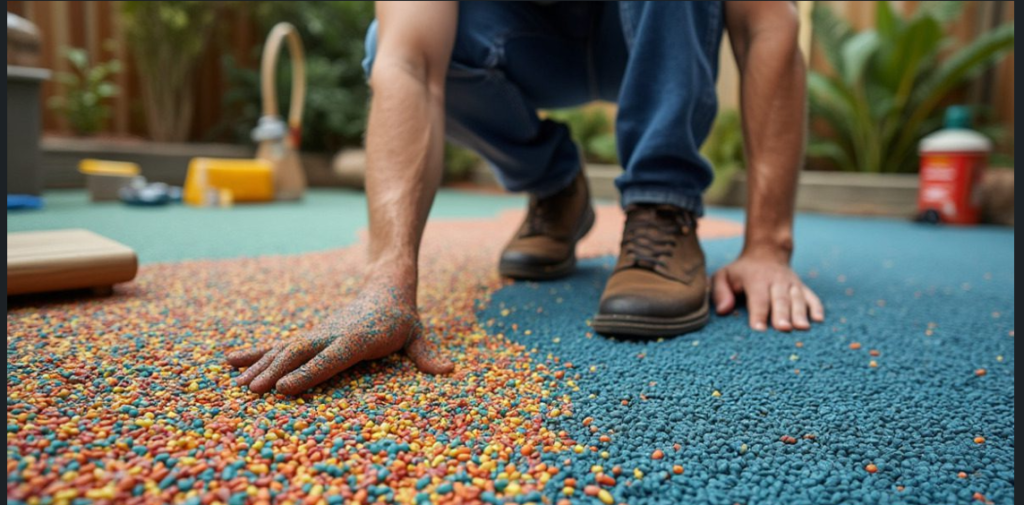
Wetpour rubber is a soft surface made from recycled rubber granules and a binder.
It’s poured on site as one solid layer. Unlike sand or bark, it doesn’t shift, scatter, or wash away.
It’s now the most common safety surface for creches and pre-schools in South Africa.
Why Playground Surfaces Matter
Toddlers fall often. This is completely normal.
Their balance is still developing. What matters most is what’s underneath them when they fall.
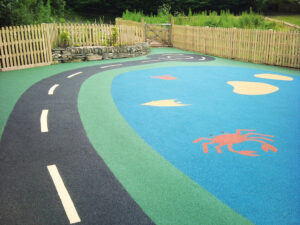
A hard surface increases injury risk. A soft, tested surface reduces it. This is exactly why wetpour rubber exists.
Critical Fall Height Explained
Critical fall height is the highest point a child can fall from safely.
Thicker wetpour rubber absorbs more impact and supports taller equipment. A tall slide needs a thicker base than a low balance beam.
Ask your creche what fall height their surface supports. A clear answer is a good sign.
Shock Absorption and Testing
Good quality wetpour rubber is tested using standard impact tests.
These measure how much force reaches the surface during a fall. Lower force means a safer surface.
Many South African installers test against EN 1177, a trusted European standard. Ask if your creche’s surface has been tested.
Grip, Weather, and Drainage
Falls don’t only happen from height. Slipping on wet surfaces is a real risk too.
Good wetpour rubber has a textured top for grip, even in the rain. It’s also UV-stable, so it resists cracking in Gauteng sun.
Proper installation lets water drain through the surface. This prevents puddles and slip hazards during storms.
Hygiene and Everyday Practicality
Wetpour rubber doesn’t attract mould, mildew, or insects the way grass or mulch can.
Spills wipe away easily. This matters in any creche where hygiene is a daily priority.
It’s also seamless, so there are no gaps or loose pieces for little feet to catch on.
Questions Every Parent Should Ask
Before enrolling your child, visit the playground yourself. Ask:
- What fall height does the surface support?
- Was it professionally tested for impact absorption?
- How old is the current installation?
- Is there a regular maintenance schedule?
Vague answers to these questions are a warning sign.
Red Flags to Watch For
Watch for cracked, peeling, or uneven rubber. This often means poor installation or low-quality material.
A strong chemical smell can point to a low-grade binder. If the surface looks thin or worn, ask when it was last checked.
How Turfgreen Group Helps
We install wetpour rubber surfacing for creches across Roodepoort and Johannesburg.
Balancing Cost and Safety
Cheaper surfacing exists. But cutting costs often means thinner rubber or untested materials.
This directly affects how much impact the surface can absorb. Think of wetpour rubber as an investment in your child’s safety, not just a playground feature.
Turfgreen Group gives clear, transparent quotes, so you know exactly what you’re paying for.
Final Thoughts
Playground surfacing is easy to overlook, but it plays a real role in your child’s daily safety.
Quality wetpour rubber, properly installed and maintained, significantly lowers injury risk. It’s a small detail with a big impact.
Contact Turfgreen Group today for a professional site assessment and quote.