
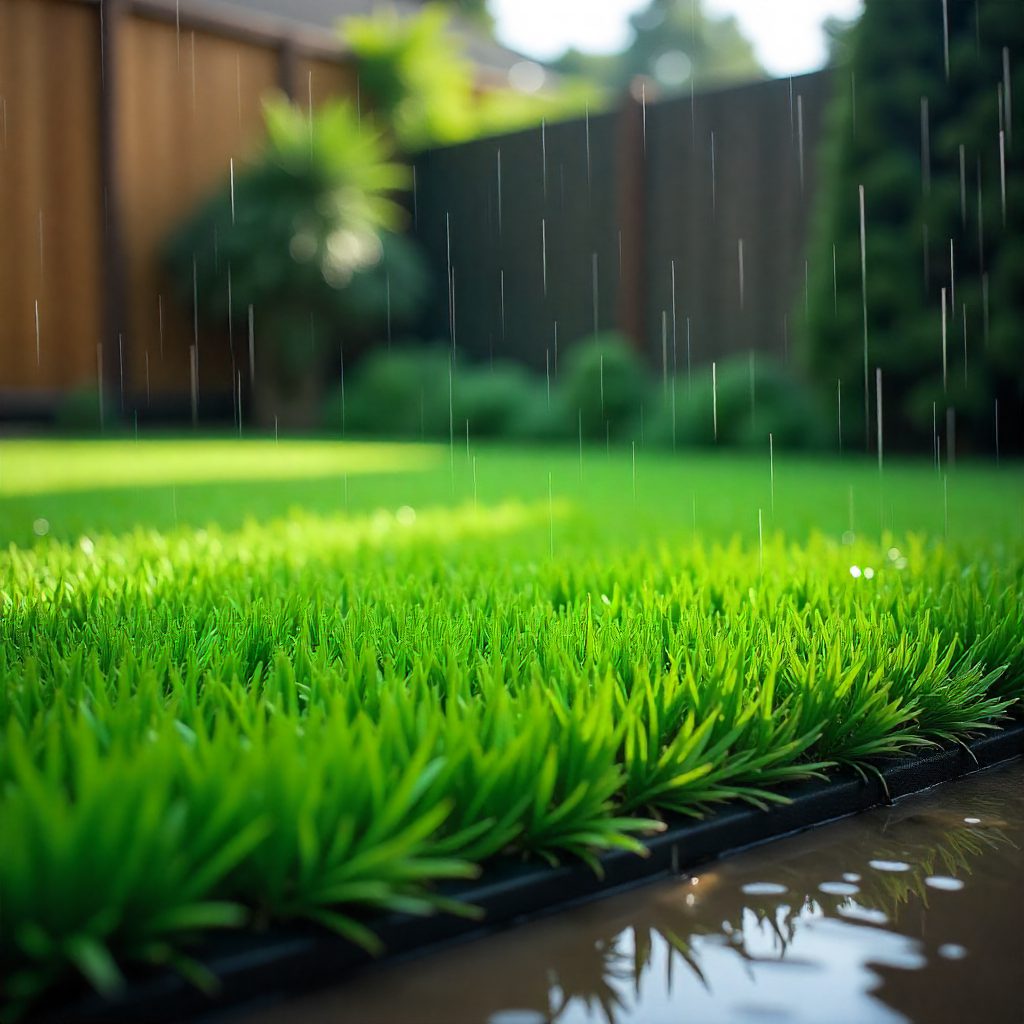
How Artificial Grass Copes With Gauteng’s Summer Thunderstorms and Drainage Needs
Gauteng summers arrive with drama. Mornings are clear and hot. By four in the afternoon, the sky turns charcoal. Then the Highveld unloads 30mm of rain in twenty minutes. Homeowners across Johannesburg and Pretoria ask us the same question every October. Will artificial grass survive this? The short answer is yes. The longer answer depends entirely on what sits beneath the turf. Artificial grass drainage in Gauteng is an engineering exercise, not a landscaping afterthought.
Why Gauteng Summers Test Every Lawn Surface
Johannesburg sits at roughly 1,740 metres above sea level. The city receives an annual rainfall of about 760 millimetres. Almost all of that falls between October and March. The rain does not arrive gently. It arrives in convective bursts. The summer rainfall region of South Africa is dominated by convective storms, and much of it records more than 60 thunderstorm days per year. The Highveld, covering Gauteng, Mpumalanga and parts of the Free State, is especially prone to intense afternoon and evening thunderstorms between October and March. That intensity is the real challenge. A surface that handles steady drizzle may fail under a cloudburst. Natural lawns compound the problem. Waterlogged kikuyu turns to mud. Foot traffic creates compaction. Compaction reduces infiltration further, and the cycle worsens. Properly installed synthetic turf breaks that cycle.
How Artificial Grass Drainage Actually Works
Drainage happens in three layers. Each one matters.
The Perforated Backing
Quality artificial grass is manufactured with punched drainage holes across the backing. These are typically spaced every 10cm in a grid pattern. Most premium products drain between 50 and 60 litres per square metre per minute. That figure comfortably exceeds any recorded Highveld downpour. Cheaper imported turf often has fewer perforations or a solid latex backing. This is the first place budget installations fail.
The Aggregate Sub-Base
This layer does the heavy lifting. Water passes through the turf in seconds. It then needs somewhere to go. A correct Gauteng sub-base uses 75mm to 100mm of compacted crushed stone. G5 or 19mm aggregate works well. On top of that sits a 25mm to 40mm layer of crusher dust or quarry sand. This creates the smooth screed surface. The aggregate creates void space. Void space stores water temporarily during peak flow. The stored water then percolates into the subsoil after the storm passes. Skipping the stone layer is the single most common installation error we see.
Falls, Gradients and Edge Detailing
Water must exit somewhere. A fall of 1:80 toward a garden bed or channel is usually sufficient. Perimeter edging should never form a dam. Timber or composite edging needs weep gaps. Concrete kerbing needs drainage slots. Where turf meets a paved patio, install a slot drain or channel drain. This prevents sheet flow across the paving.
What Happens During a Highveld Downpour
Picture a typical Sandton storm in January. Twenty-five millimetres falls in fifteen minutes. On a correctly installed synthetic lawn, water disappears through the backing almost immediately. No puddles form on the surface. The aggregate layer absorbs the surge. Excess water moves laterally toward the lowest point. Within an hour of the storm ending, the surface is walkable. Within two hours, children can play on it. A natural lawn in the same conditions stays soggy for a day or more. Heavy clay soils in areas like Centurion and Midrand hold water even longer. This recovery speed is the strongest practical argument for artificial grass in Gauteng.
Common Drainage Mistakes to Avoid
We are often called to rescue failed installations. The causes repeat themselves.
Laying turf directly onto soil. Without aggregate, there is no void space. Water sits between the soil and the backing.
Laying turf onto existing concrete. This can work, but only with a drainage mat and confirmed falls. Flat concrete slabs create ponding.
Over-compacting the sub-base. Compaction gives stability. Excessive compaction destroys permeability.
Ignoring the subsoil. Gauteng has pockets of heavy expansive clay. Where infiltration is poor, a French drain or perforated agricultural pipe becomes essential.
Blocked geotextile. Weed membrane is useful, but it must be permeable landscape fabric. Plastic sheeting is not.
Poor infill management. Silica sand infill supports the fibres. It should never be so dense that it seals the perforations.
Hail, Lightning and UV Exposure
Thunderstorms bring more than water. Gauteng hail can be severe. Artificial grass handles hail well. The fibres flex and recover. Unlike a natural lawn, there is nothing to shred or bruise. Lightning is a genuine Highveld concern. Areas over the Highveld record on average between 10 and 15 lightning flashes per square kilometre per year. Artificial grass does not attract lightning. It contains no metal components in the pile. However, metal edging and fencing nearby should follow standard earthing practice. UV degradation matters more than most buyers realise. Gauteng receives intense high-altitude sunlight. Always specify turf with UV stabilisers and a minimum eight-year UV warranty.
Installing for Gauteng’s Soil Conditions
Soil profile varies sharply across the province. Northern suburbs of Johannesburg often sit on granite-derived sandy loam. Infiltration here is reasonably good. Parts of the West Rand and Centurion sit on dolomitic ground. Johannesburg’s stormwater by-laws specifically flag site development on land underlain by, or within 500m of, dolomitic geology as requiring professional engineering input. That matters. Uncontrolled water ingress into dolomite can contribute to sinkhole risk. Never discharge concentrated stormwater into a soakaway in a dolomitic area without engineering advice. Heavy black turf soil in parts of the East Rand requires attenuation. Here we typically build a deeper stone reservoir beneath the turf.
Stormwater Compliance and Sustainable Drainage
Municipal rules apply to hard landscaping. Johannesburg’s stormwater framework is managed by the Johannesburg Roads Agency, which publishes standard design details for drainage infrastructure. Property owners should not discharge concentrated runoff onto neighbouring erven. The City of Johannesburg Stormwater Management By-law sets out these obligations clearly. There is a positive angle here too. Artificial grass installed over a deep stone base behaves like a sustainable drainage system. Local SuDS pilot projects in Johannesburg have demonstrated how permeable interventions reduce flood risk. A well-built synthetic lawn attenuates runoff rather than accelerating it. Compare that to paving or decking. Both shed water immediately into the street.
Post-Storm Maintenance Checklist
Artificial grass is low maintenance, not no maintenance. Storm season needs a short routine. Clear leaves and debris after each major storm. Organic matter breaks down and clogs perforations over time. Brush the pile against the grain every few weeks. This redistributes infill and lifts flattened fibres. Check perimeter drains and channel grates monthly. Silt build-up is the usual culprit behind sudden ponding. Inspect joins and seams after heavy rain. Water movement can occasionally lift a poorly glued seam. Rinse the surface once a season. This flushes fine dust from the backing. Watch for moss on permanently shaded sections. A mild biodegradable cleaner resolves it.
Artificial Grass Versus Natural Lawn in Storm Season
The comparison is straightforward. Natural lawn needs mowing, fertiliser and constant watering outside the rainy months. It becomes mud in January and dormant brown in July. Artificial grass stays consistent year-round. It needs no irrigation, which matters given ongoing water constraints across Gauteng. Erosion is another factor. Sloped natural lawns lose topsoil during severe Highveld thunderstorms. Synthetic turf anchored over compacted aggregate holds the slope in place. Pet owners see the biggest difference. No muddy paws after every storm.
Choosing the Right Installer in Gauteng
Ask specific questions before signing. Request the drainage rate of the product in litres per square metre per minute. A reputable supplier will supply the technical datasheet. Ask for the sub-base specification in writing. Depth, aggregate grade and compaction method should all be stated.Ask how falls will be managed and where water will discharge. Ask about the UV warranty and the workmanship guarantee separately. They are different things. Visit a completed installation that is at least two summers old. Performance after two Highveld rainy seasons tells you everything. Finally, check whether the installer understands local climate data. Anyone planning drainage should be reading forecasts and rainfall patterns from the South African Weather Service and regional climate resources.
Frequently Asked Questions
Does artificial grass flood? Properly installed turf does not flood. Ponding almost always indicates a sub-base or gradient failure rather than a product failure.
How long does it take to dry? Surface water clears within minutes. The pile is dry to the touch within an hour in Gauteng conditions.
Can it be installed on a slope? Yes. Slopes often drain better than flat areas. Anchoring and edge restraint become more important.
Will hail damage the fibres? No. Hail may flatten the pile temporarily. Brushing restores it.
Is it safe near lightning? Yes. The turf itself poses no additional lightning risk. Standard lightning safety guidance for the Highveld still applies to people and structures.
The Bottom Line
Artificial grass drainage in Gauteng works when it is engineered, not improvised. The turf itself is rarely the problem. The stone, the screed, the falls and the discharge point determine whether your lawn survives a January cloudburst. Get those right and you have a surface that is usable an hour after the worst Highveld storm. Get them wrong and you have an expensive puddle. Turfgreen Group builds for Gauteng conditions specifically. Contact us for a site assessment before the rainy season peaks.
Pingback: Wetpour Rubber Surface: EPDM vs SBR Explained