Hybrid Landscaping for Mixed-Use Estates
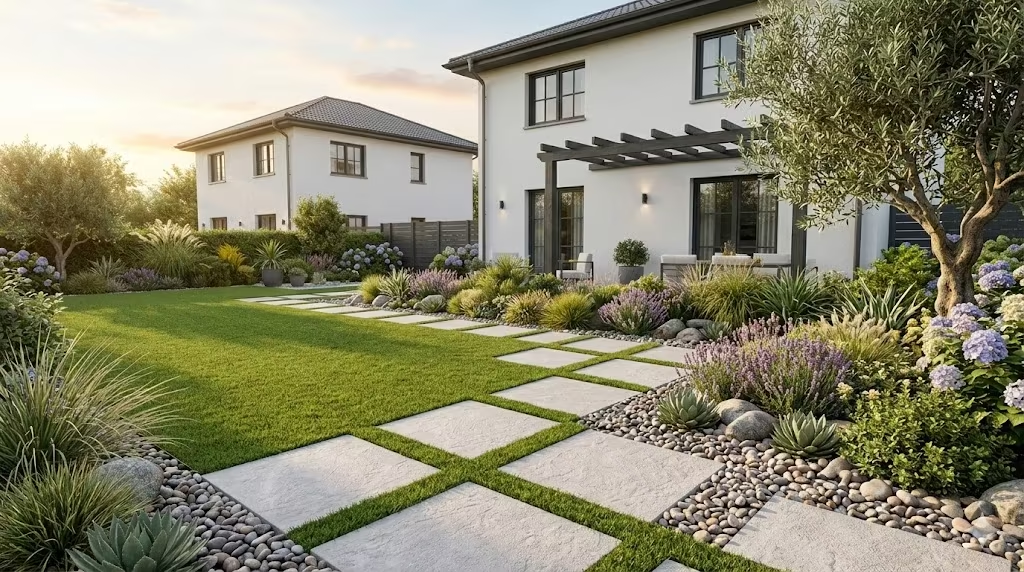
Mixed-use estates ask a lot of their outdoor spaces. Residents want green views. Retailers want tidy entrances. Children need safe play areas. Managers want low maintenance costs. No single surface meets every one of those needs. That is why hybrid landscaping is gaining ground across South Africa. It blends natural and synthetic materials, so each area gets the surface that suits it best. This guide explains how to combine instant lawn, artificial grass and wetpour. It also shows how estate managers and developers can plan the mix wisely.
What Is Hybrid Landscaping?
Hybrid landscaping uses more than one surface type within a single design. Each material is chosen for a specific job. The result is a landscape that looks cohesive but performs differently in each zone. On a mixed-use estate, this approach makes practical sense. Residential, commercial and recreational areas have very different demands. A walkway outside a café sees heavy foot traffic. A communal garden needs to be soft and colourful. A playground needs impact protection.
Three materials form the core of most hybrid designs:
- Instant lawn: pre-grown natural turf, laid as rolls for immediate results.
- Artificial grass: synthetic turf that stays green with minimal care.
- Wetpour: a poured rubber surface that cushions falls and drains well.
Used together, they cover almost every outdoor scenario on an estate.
Why Mixed-Use Estates Need a Hybrid Approach
Mixed-use estates combine homes, offices, shops and leisure facilities. Foot traffic varies widely across these zones. So do sunlight, drainage and safety requirements. A single surface often fails somewhere. Natural lawn struggles under constant trampling. Artificial grass can feel out of place in a leafy residential garden. Wetpour suits play areas but not entire estates. Hybrid landscaping solves this by matching surface to purpose. It also spreads risk. If one area needs repairs, the rest of the estate stays fully functional. There are financial benefits too. Spending more on high-wear zones and less on decorative ones keeps budgets balanced. Over time, this targeted approach often lowers total maintenance costs.
Instant Lawn: The Living Heart of the Estate
Instant lawn remains the most inviting surface for communal areas. It cools the air, softens the landscape and gives residents a natural place to relax. Unlike seed, it delivers a usable lawn within days.
Where Instant Lawn Works Best
Use instant lawn in spaces where people linger. Good examples include:
- Central courtyards and picnic areas
- Residential garden verges
- Entrance features and feature lawns
- Open fields for informal sport
Instant lawn also helps with erosion control. Its dense root mat holds soil in place on slopes. That makes it useful around retention areas and landscaped berms.
Managing Water and Upkeep
Natural lawn needs water, mowing and feeding. On large estates, these costs add up. Choosing a hardy, drought-tolerant variety reduces the burden. Efficient irrigation helps further. South Africa faces ongoing water pressure, so smart planning matters. Rand Water offers practical guidance on water-wise gardening that suits estate managers. Pairing instant lawn with synthetic alternatives lets you limit irrigated areas to where they matter most.
Artificial Grass: Green Without the Upkeep
Artificial grass fills the gaps where natural lawn struggles. It stays green in shade, drought and heavy traffic. It needs no mowing, feeding or watering.
Ideal Applications for Artificial Grass
Consider synthetic turf for areas such as:
- Rooftop terraces and podium decks
- Shaded courtyards between buildings
- Pet areas and dog runs
- Commercial entrances and display zones
- Narrow strips beside paving
Rooftops and podium gardens are particularly suitable. Natural lawn needs soil depth and drainage that these structures cannot always provide. Artificial grass offers a lightweight alternative.
Quality and Installation Matter
Not all synthetic turf performs equally. Look for UV-stabilised yarn, good drainage backing and a solid sub-base. Poor installation leads to puddles, ripples and early wear. Professional installers follow recognised standards. The South African Landscapers Institute is a useful starting point for finding qualified industry professionals. Choosing experienced contractors protects your investment for years.
Wetpour: Safety Where It Counts
Wetpour is a seamless rubber surface poured on site. It absorbs impact, which makes it the preferred choice for children’s play areas. It also drains water quickly, so play can resume soon after rain.
Why Wetpour Suits Play Zones
Falls are the most common playground injury. Hard ground makes them worse. Wetpour reduces injury risk by cushioning the landing. Thickness is matched to the height of the play equipment. Taller structures need deeper layers. Designers should check this carefully during planning. The Royal Society for the Prevention of Accidents publishes playground safety resources that explain the principles behind impact-absorbing surfaces.
Beyond the Playground
Wetpour has other uses on mixed-use estates. It works well around:
- Outdoor gym stations
- Splash pads and pool surrounds
- Walking trails and jogging loops
- Sensory gardens and accessible play areas
Its colour options also add design value. Bright shapes and patterns can guide movement and brighten dull spaces. Because it is slip-resistant when wet, it suits water features too.
Designing a Seamless Hybrid Landscape
A good hybrid design feels unified, not patched together. The transitions between surfaces matter as much as the surfaces themselves.
Plan by Zone and Traffic
Begin by mapping the estate into zones. Note how many people use each area and when. Then assign materials accordingly.
A simple framework looks like this:
- High traffic, low light: artificial grass
- Social and relaxation spaces: instant lawn
- Children’s play and fitness: wetpour
- Slopes and feature areas: instant lawn with ground cover
This framework is only a starting point. Every estate has unique conditions. A site visit and soil assessment help refine the plan.
Create Clean Transitions
Edges are where hybrid designs succeed or fail. Use concrete edging, steel strips or paving borders to separate surfaces. These keep lawn roots out of synthetic turf and stop wetpour from spreading. Consistent colour palettes also help. Choose a turf shade that complements natural lawn. Match wetpour colours to the estate’s branding or surroundings. Small details like these create a polished finish.
Think About Drainage
Water must go somewhere. Each surface drains differently, so plan the gradients carefully. Natural lawn absorbs water. Artificial grass and wetpour rely on permeable bases and sub-surface drainage. Good drainage protects the surfaces and the buildings around them. It also supports sustainable urban drainage goals, which are increasingly important in new developments.
Sustainability and Long-Term Value
Sustainability is now central to estate planning. Buyers and tenants notice green credentials. Developers also face growing pressure to reduce resource use.
Hybrid landscaping supports these goals in several ways:
- It reduces irrigation demand by limiting natural lawn to key areas.
- It cuts fuel use and noise from frequent mowing.
- It extends surface lifespan by matching materials to wear levels.
- It keeps spaces usable in all seasons.
The Green Building Council South Africa promotes sustainable design in the built environment. Developers pursuing green ratings can use hybrid landscaping to support their goals. Water research also matters here. The Water Research Commission shares studies on water conservation in the South African context. Reviewing this research can strengthen your landscaping decisions.
Quality Assurance and Compliance
Materials should meet recognised standards wherever possible. The South African Bureau of Standards sets and maintains national standards. Checking compliance gives estate owners confidence in product quality and safety.
Cost Considerations
Upfront costs vary between the three materials. Artificial grass and wetpour usually cost more to install than instant lawn. However, they cost less to maintain. Instant lawn is cheaper to lay but needs ongoing care. Water, labour and equipment add to the yearly bill. Over several years, the gap narrows. A hybrid approach lets you balance capital and operating costs. Spend more where durability matters most. Save where natural lawn performs well. Always compare lifetime cost, not just the installation price. Phasing is another option. Estates can complete high-priority zones first and add others later. This spreads spending and allows managers to learn from early results.
Maintenance Tips for Each Surface
Each material needs a different routine. A simple schedule keeps everything looking its best.
Instant lawn: Mow regularly, water deeply but less often, and feed seasonally. Aerate compacted areas each year.
Artificial grass: Brush the fibres to keep them upright. Rinse off dust and pet waste. Remove leaves and debris promptly.
Wetpour: Sweep away loose dirt and sand. Wash with mild detergent when needed. Inspect for wear or damage every few months.
Assigning one maintenance team to all three surfaces simplifies management. Clear schedules and checklists prevent small problems from becoming costly repairs.
Partnering With the Right Landscaping Specialist
A hybrid project involves several trades. Soil preparation, turf laying, synthetic installation and rubber surfacing all need skill. Coordinating them under one provider reduces delays and miscommunication. Look for a company with experience across all three materials. Ask for completed project examples, especially on estates. Request clear quotes, warranties and maintenance advice. Turfgreen Group brings together instant lawn, artificial grass and wetpour expertise. That integrated approach helps estates achieve consistent quality from design through to handover.
Conclusion: One Estate, Many Surfaces, One Vision
Mixed-use estates are complex environments. Their outdoor spaces must look attractive, perform reliably and stay safe. No single material delivers all of this alone.
Hybrid landscaping offers a smarter path. Instant lawn brings natural beauty to social spaces. Artificial grass keeps difficult areas green. Wetpour protects children and active users. With thoughtful zoning, clean transitions and good drainage, these surfaces work as one system. The result is a landscape that saves water, controls costs and delights residents. Ready to explore hybrid landscaping for your estate? Contact Turfgreen Group for a site assessment and tailored recommendations.
Recent Posts: