
Preparing Waterlogged Soil for Instant Lawn: A Practical Guide
Instant lawn can transform a bare garden in a single day. But it can only perform as well as the soil beneath it. If your soil stays soggy after rain, your new turf is at risk. Preparing waterlogged soil for instant lawn is the most important job before delivery day. Skip it, and you may face yellow patches, shallow roots and fungal disease. The good news is that most drainage problems can be fixed. This guide explains how to test your soil, tackle standing water and lay turf with confidence. Follow these steps, and your lawn will root deeper, stay greener and cope better with summer storms.
Why Waterlogged Soil Is a Problem for Instant Lawn
Grass roots need oxygen as much as they need water. When soil is saturated, air spaces fill up and roots struggle to breathe. The Royal Horticultural Society notes that waterlogging is common on poorly drained soils and compacted heavy soils. It can also encourage moss, algae and fungal problems in turf. New turf is especially vulnerable. Freshly laid instant lawn has shallow roots and must knit into the soil quickly. Soggy ground slows this process. Roots stay near the surface, and the lawn feels spongy underfoot. Rolls can also slip or lift on wet, muddy soil. Poor drainage also causes long-term trouble. A lawn that sits in water struggles through every rainy season. Fixing the soil once, before you lay turf, is far cheaper than repairing a failed lawn later.
How to Spot Poorly Draining Soil
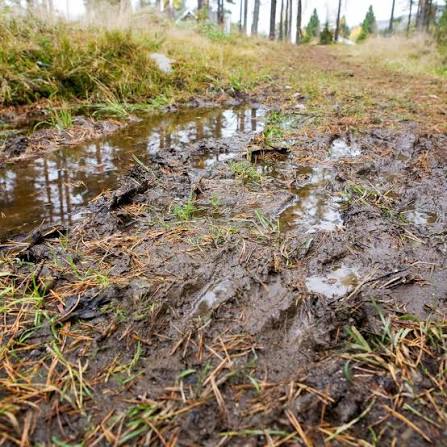
You do not need special equipment to see the warning signs. Walk your garden a day or two after heavy rain and look closely. Puddles that last more than 24 hours point to a drainage problem. Soil that feels sticky or glue-like also signals trouble. Dark, smelly patches suggest oxygen-starved ground. Look at the plants too. Moss, sedges and other water-loving weeds thrive in wet spots. Existing grass may look thin, yellow or patchy. Low corners, areas near downpipes and spots beside paving are common problem zones. Check these areas first. Heavy clay is the usual culprit. Many South African gardens have dense clay that holds water for days. Compaction from builders’ machinery makes matters worse. New homes often have a hard, compacted layer just below the surface.
Test Your Soil Drainage Before You Order Turf
A simple percolation test removes the guesswork. Dig a hole about 30 cm wide and 30 cm deep. Fill it with water and let it drain completely. This saturates the surrounding soil. Then refill the hole and measure how fast the water level drops. Iowa State University Extension describes the percolation test as the best way to judge drainage, even on slopes. It also warns that sloping sites are not always well drained. Clay layers and hardpans can still trap water. If water is still standing after many hours, your drainage is poor. Test several spots, because conditions vary across a garden. Record the results and mark the wettest areas. These become your priority zones for the work ahead.
Fix the Cause of Waterlogging First
Before touching the soil, ask why water is collecting. Sometimes the cause is simple. Blocked gutters, leaking pipes or overflowing downpipes can flood one corner. Runoff from paving or a neighbouring slope may also drain onto your lawn area. Redirect these sources away from the site. Next, check the levels. Water should always move away from buildings and towards a safe exit. Low spots collect water and stay wet. Fill them and grade the surface with a gentle fall, roughly 1 to 2 percent. The Michigan State University Extension sod guide advises raking the soil to remove low areas and drainage problems. Do this early in the process. Otherwise, you may simply bury the problem under new turf.
Loosen Compacted Soil Before Laying Instant Lawn
Compaction squeezes out the pore spaces that let water drain. Turf laid on hard ground simply sits on top. Roots cannot penetrate, and water runs off or pools. Loosen the soil first. Colorado State University Extension advises cultivating compacted soil to 12 inches, or about 30 cm, before installing sod. Michigan State suggests at least 15 cm where no topsoil or compost is added. Use a garden fork for small areas. For larger areas, hire a heavy rotary tiller. Timing matters. Never dig or till wet clay. It forms hard clods and compacts even further. Squeeze a handful of soil from about 10 cm down. If it crumbles when you release it, it is dry enough to work. If it stays in a sticky ball, wait a few days. Avoid over-cultivating too, because that can also damage soil structure.
Improve Heavy Clay with Organic Matter
Organic matter is the most reliable long-term fix for clay soil. Compost opens up dense ground and creates channels for water and roots. It also feeds soil life and holds nutrients. Colorado State suggests spreading three to five cubic yards of compost per 1,000 square feet. That equals roughly 25 to 40 mm over the surface. Till it into the top 15 to 20 cm. Use well-matured compost, not fresh, wet material. The RHS also recommends digging organic matter into poorly draining ground. Its lawn waterlogging guide then suggests a 5 cm layer of sharp sand before turfing. Use sand carefully, though. A little fine sand in clay can set like concrete. Use coarse, sharp sand generously, or rely on compost alone.
Level the Site and Create a Firm, Smooth Base
Instant lawn needs a smooth, firm base. Uneven ground creates dips where water collects. Those dips soon become soggy patches or scalped ridges. After tilling, rake the soil in several directions. Remove stones, roots and clods. Lightly firm the surface by walking over it in small steps, or use a light roller. The soil should feel firm but not hard. It should hold a footprint only a few millimetres deep. Set the final level slightly below paths, patios and edging. Turf has thickness, so allow for it. Otherwise, the lawn sits proud and sheds water onto paving. Check the finished grade with a long straight edge. Fill any hollows now, not after the turf is down.
Install Drainage Where Soil Improvement Isn’t Enough
Sometimes soil improvement alone is not enough. Persistent wet areas need a route for water to escape. That is where a drain comes in. A French drain is a common solution. As this French drain overview explains, it is a gravel-filled trench, often with a perforated pipe. It redirects surface water and groundwater away from an area. The trench needs a gentle fall towards an outlet. That outlet might be a stormwater drain, a soakaway or a lower part of the property. Drains only work if water has somewhere to go. Check your municipality’s rules before connecting to stormwater systems. For large or complex sites, ask a landscaper or engineer to design the system. Install drains before finishing the levels, so you disturb the ground only once.
Time Your Turf Delivery and Laying
Good preparation can be undone by poor timing. Avoid laying turf on sodden ground. Wait until the soil is workable and the surface has no standing water. Summer thunderstorms can arrive suddenly, so watch the forecast. Colorado State advises moistening the soil several days before sod arrives. It should be slightly moist, not wet enough to compact. Book delivery for the day you plan to lay. Turf is a living product and should not sit rolled on pallets for long. Lay rolls in a brick pattern with tight seams. Work from planks to avoid compacting the soil. Press the turf down lightly with a roller afterwards. Trim edges with a sharp blade.
Water and Care for Your New Lawn
Even well-drained soil needs careful watering after laying. Water thoroughly soon after installation. Then keep the turf and soil beneath it moist. Do not let it turn soggy. Colorado State notes that new sod should be well rooted within two to three weeks. Check root progress after about two weeks. Gently lift a corner of one roll. If it resists, the roots are knitting in. Then reduce watering frequency and water more deeply. This encourages roots to chase moisture downwards. Water early in the morning to reduce disease risk. Keep foot traffic to a minimum for the first few weeks. Wait until the turf is firmly rooted before the first mow. If puddles appear, act quickly and fill the low spot.
Common Mistakes to Avoid
Several errors cause most turf failures on wet ground. The first is laying turf straight over compacted, soggy soil. The second is tilling clay while it is wet. The third is adding thick topsoil over clay without loosening the layer beneath. Water then perches at the boundary, and roots stay shallow. Finally, many people skip drainage tests and guess. A few hours of testing can save considerable cost in replacement turf.
Start with Healthy Soil for a Lasting Lawn
Preparing waterlogged soil for instant lawn takes time, but it pays off for years. Test the drainage, fix the water source and loosen compaction. Improve the soil, and add drains where the problem is severe. Then level carefully and lay turf on soil that is moist, not soggy. These steps give roots the air and space they need. The result is a lawn that stays green, resists disease and handles heavy rain. Ready to get started? Speak to the Turfgreen Group team about the right turf for your garden. Share your drainage challenges, and get expert advice before you order.
Recent Posts:
-
EPDM vs SBR: Understanding the Two Layers of a Wetpour Rubber Surface
-
Cost Breakdown: Artificial Grass Installation Pricing in Gauteng in 2026
-
Artificial Grass Lifespan in Gauteng: How UV Resistance Protects Your Lawn
-
Artificial Grass for Complexes and Estates: Low-Maintenance Solutions for Body Corporates