Wetpour Rubber for Outdoor Gyms and Wellness Paths in Office Parks
Office parks are competing for talent. Amenities now decide who signs a lease. Outdoor gyms and wellness paths have become a top request from tenants. Wetpour rubber surfacing makes these spaces safe, durable, and inviting. Turfgreen Group installs wetpour rubber across corporate campuses nationwide. This guide explains why it’s the smart choice for outdoor fitness zones. We’ll cover safety, design, sustainability, and long-term value.
What Is Wetpour Rubber?
Wetpour rubber is a seamless, poured-in-place surface. It combines a shock-absorbing base layer with a colored wear layer on top. Installers mix recycled rubber granules with polyurethane binder, then trowel it onsite. The result is a smooth, cushioned surface with no seams or gaps. It flexes under impact, which reduces strain on joints. That makes it ideal for high-traffic fitness zones and walking paths. Unlike loose-fill materials such as mulch or gravel, wetpour rubber stays put. It doesn’t shift, scatter, or wash away in heavy rain. Facilities teams appreciate the low upkeep this surface demands.
Why Office Parks Are Investing in Outdoor Wellness
Employers know physical activity boosts more than just health. Movement improves mood, focus, and workplace performance. The CDC’s workplace health guidance links regular activity to lower absenteeism and stronger morale. Commercial landlords have noticed the shift too. A JLL report found that 60% to 70% of employees with access to wellness amenities use them weekly. That kind of engagement translates directly into tenant retention. rejournals Outdoor gyms give employees a reason to step away from their desks. Wellness paths encourage walking meetings and midday breaks. Both features turn unused green space into functional, revenue-supporting real estate. Property owners are also responding to changing tenant expectations post-pandemic. Companies want office environments that feel like an experience, not just a workspace. A well-designed outdoor fitness area sends a clear message about company culture.
Safety Standards Every Facility Manager Should Know
Safety surfacing isn’t just about comfort. It’s about liability, compliance, and long-term risk management. Two standards matter most for outdoor gym and path installations. First is impact attenuation. The ASTM F1292 specification sets minimum requirements for shock absorption. Surfaces installed under fitness equipment must meet this benchmark to limit injury risk from falls. Second is accessibility. The U.S. Access Board’s guide to floor and ground surfaces requires accessible routes to be firm, stable, and slip-resistant. Wetpour rubber satisfies both standards when installed at the correct thickness and density. This dual compliance matters for wellness paths especially. A path that’s ADA-compliant welcomes employees using wheelchairs, canes, or strollers. It also holds up to foot traffic in rain, heat, and freezing temperatures. Facility managers should ask installers for third-party test data before signing off. Reputable contractors, including Turfgreen Group, provide documentation showing compliance with both standards. This protects the property owner and every person who uses the space.
Wetpour Rubber vs. Other Surfacing Options
Office parks have several surfacing choices for outdoor fitness areas. Each comes with tradeoffs in cost, maintenance, and performance. Understanding these differences helps property teams make informed decisions.
Poured-in-place rubber (wetpour) offers a seamless, custom-colored finish. It requires higher upfront investment but minimal ongoing maintenance. Most installations last 10 to 15 years with proper care.
Rubber mulch or loose-fill rubber costs less initially. However, it scatters, compacts unevenly, and needs regular topping up. This makes it a poor fit for high-traffic corporate settings.
Synthetic turf works well for open lawns and gathering spaces. It doesn’t provide the same shock absorption needed under gym equipment. Turf also heats up significantly more than wetpour rubber in direct sun.
Decomposed granite creates a natural-looking path surface. It can meet accessibility standards when properly stabilized. But it lacks the cushioning fitness equipment areas require, and it degrades faster under heavy foot traffic.
For office parks combining a wellness path with an outdoor gym, wetpour rubber often wins. It handles both applications without switching materials or contractors.
Designing Wellness Paths People Actually Use
A wellness path succeeds only if employees walk it. Design choices make the difference between an empty amenity and a popular one. Turfgreen Group builds paths with usage in mind, not just aesthetics. Width matters more than most property teams expect. Paths should comfortably fit two people walking side by side. This supports casual conversations and walking meetings, which employees increasingly request. Color and texture also influence how a space feels. Wetpour rubber comes in dozens of color combinations, from earthy tones to bold brand colors. Some companies incorporate logo elements or wayfinding markers directly into the surface. Shade and rest points extend a path’s usability throughout the day. Benches, tree cover, or shade structures placed at intervals encourage longer sessions. Distance markers help employees track progress without needing a fitness app. Connecting the path to an outdoor gym creates a complete circuit. Employees can walk, then transition into strength or mobility exercises. This layout maximizes the value of limited outdoor square footage.
Outdoor Gym Zones Built for Real Use
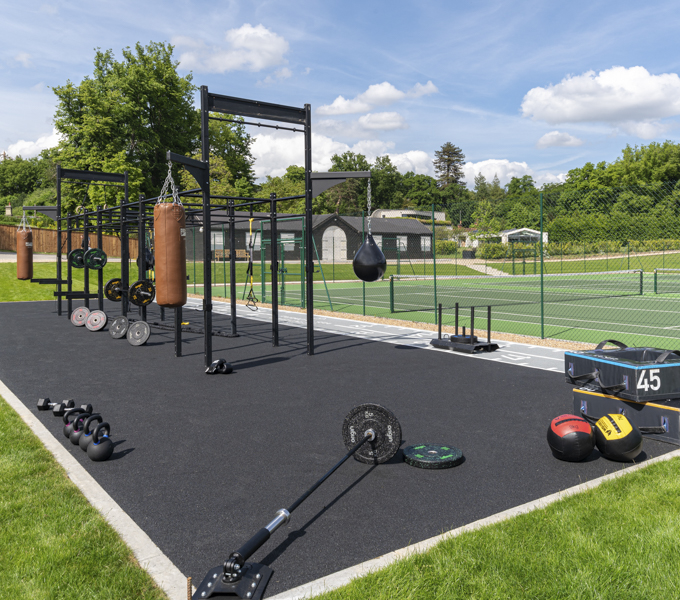
Outdoor gyms differ from playgrounds and require different planning. Equipment includes resistance stations, pull-up bars, and functional training rigs. Each piece has a specific fall zone requiring cushioned surfacing. Wetpour rubber thickness varies based on equipment height. Taller equipment needs a thicker pour to meet critical fall height requirements under ASTM F1292. Turfgreen Group calculates this per station during the design phase. Drainage is another critical factor for outdoor installations. Wetpour rubber is permeable, allowing water to pass through rather than pool. This keeps the surface usable immediately after rainfall, unlike compacted mulch or bare ground. Slip resistance also matters in gym zones specifically. Sweat and rain both increase slip risk during workouts. A properly textured wetpour surface maintains grip even when wet, reducing injury risk during active use.
Sustainability Benefits of Recycled Rubber Surfacing
Sustainability credentials increasingly influence commercial real estate decisions. Wetpour rubber surfacing supports these goals directly. Most installations use recycled tire rubber as the primary raw material. Recycled rubber from scrap tires is a waste material well suited to landscaping applications like this, according to research compiled for the EPA’s GreenScapes program. Diverting tires from landfills reduces fire risk and environmental harm. epa Property teams pursuing LEED certification or ESG reporting benefit from documenting recycled content. Wetpour rubber surfacing can contribute credits toward sustainable materials use. This makes it attractive beyond its functional performance. Regarding health and safety, the Consumer Product Safety Commission maintains a dedicated resource center on recycled rubber surfacing. It confirms no specific chemical hazard has been identified in properly manufactured wetpour products. Facility managers can reference this when addressing tenant questions.
Maintenance and Long-Term Value
Low maintenance is one of wetpour rubber’s biggest selling points. Unlike mulch, it doesn’t need annual refilling or raking. Routine care involves occasional pressure washing and debris removal. Property teams should schedule an annual inspection regardless of visible wear. This checks for surface separation, drainage issues, or UV fading. Catching problems early extends the surface’s usable life significantly. Most wetpour installations carry manufacturer warranties covering material defects. Turfgreen Group provides maintenance guidance with every installation. This helps property managers budget accurately over the surface’s lifespan. Compared to synthetic turf or loose-fill alternatives, total cost of ownership favors wetpour rubber. Fewer replacement cycles and lower labor requirements offset the higher initial investment. Over a decade, many property owners find it the more economical choice.
Choosing the Right Wetpour Rubber Installer
Not all wetpour rubber installations perform equally. Mix ratios, cure times, and base preparation all affect durability. Poor installation leads to cracking, delamination, or premature wear within a few years. Property teams should request references from comparable commercial projects. Ask installers about their experience with ASTM and ADA compliance specifically. Request sample panels to evaluate color, texture, and finish quality firsthand. Turfgreen Group specializes in outdoor gym and wellness path installations for office parks. Our team handles design, engineering, and installation under one contract. We work directly with property managers to meet budget and compliance requirements.
Building Outdoor Wellness Into Your Property
Outdoor gyms and wellness paths are no longer optional extras. They’re becoming standard expectations for competitive office parks. Wetpour rubber surfacing delivers the safety, durability, and sustainability these spaces demand. The investment pays off in tenant satisfaction and property differentiation. Employees notice when a workplace supports their health. That translates into stronger lease renewals and a more attractive campus overall. Turfgreen Group is ready to help design your outdoor wellness space. Contact our team to discuss surfacing options for your property.