
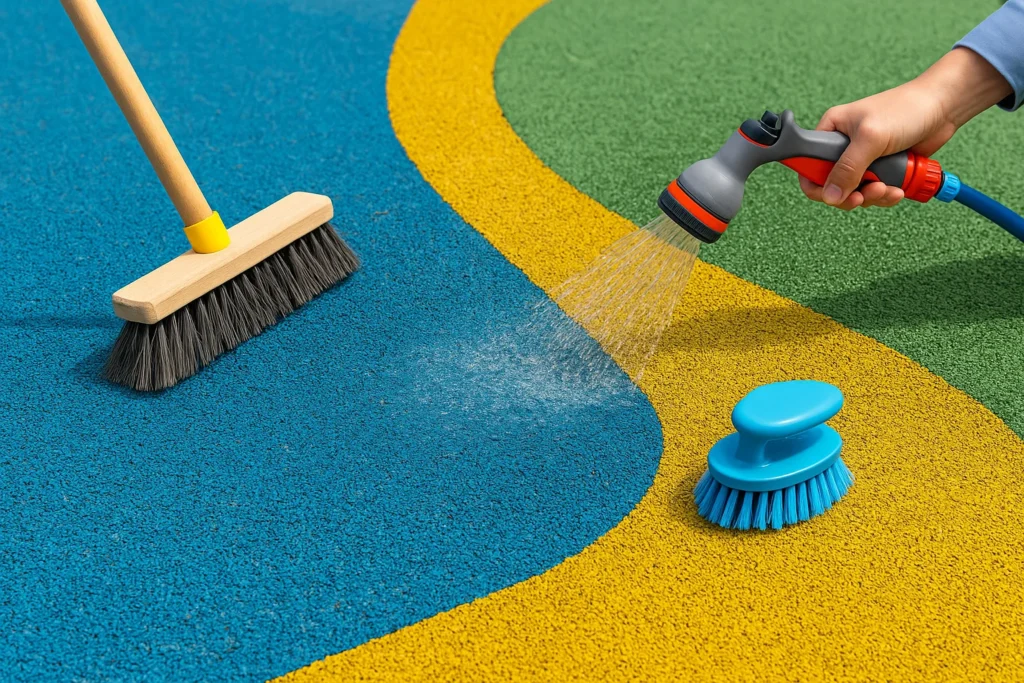
Wetpour Surface Maintenance: Cleaning and Inspection Tips for Facility Managers
A wetpour surface is a major investment in child safety. It cushions falls, drains well, and brightens any play area. However, it only performs as designed when it is properly looked after. For facility managers, wetpour surface maintenance is therefore a core part of your duty of care. This guide explains how to clean and inspect your surface. First, you will learn what to check and how often. Then you will see when to call an expert. As a result, your play area will stay safe, attractive, and durable for years.
Why Wetpour Surface Maintenance Matters
Wetpour is a seamless rubber surface made from granules bound with resin. It absorbs impact and lets rainwater drain through. However, foot traffic, sunlight, and dirt slowly change how it performs. Regular care therefore keeps those changes small and manageable. Impact protection is the biggest concern. For example, the EN 1177 standard provides a test method for finding a surface’s critical fall height. That figure is the upper limit of its head-injury protection. Consequently, a cracked, compacted, or worn surface may fall short of it. There is also a legal angle. RoSPA explains that no specific law demands an inspection programme. Nevertheless, the HSE, insurers, and standards bodies all recommend one. In addition, managers carry a legal and moral duty of care to children on site. Good maintenance also protects your budget. Small faults are cheap to repair. In contrast, ignored faults spread and can force early resurfacing.
Know Your Surface Before You Clean It
Most wetpour systems have two layers. First, a base layer of rubber crumb provides cushioning. Second, a top layer of coloured EPDM granules provides colour, grip, and weather resistance. A polyurethane binder holds both layers together. This matters because harsh chemicals and aggressive cleaning can damage the binder. For this reason, always request the care guide from your installer. Follow it closely, since guidance can differ between products and thicknesses. Also note where the surface is thickest. Depth usually reflects the fall protection needed under each piece of equipment. Therefore, never let repairs or overlays reduce that designed depth.
Build a Three-Tier Inspection Routine
RoSPA recommends a defined hierarchy of inspections for play areas. Each tier has a different purpose. Together, they catch faults early and give you a clear paper trail.
Routine Visual Inspections
Routine checks are quick and simple. They spot damage from vandalism, breakage, or litter. RoSPA suggests weekly checks as a minimum. However, busy sites need more. Trained grounds or cleaning staff can carry these out. During each visit, walk the whole surface and record what you find.
Operational Inspections
Operational inspections go into more detail. For instance, they look at minor wear and gradual deterioration. Many sites schedule these monthly or quarterly, depending on use. In either case, assign a trained person and keep written records.
Annual Independent Inspections
Once a year, bring in an independent specialist. RoSPA states that BS EN 1176 and the HSE strongly recommend at least one independent inspection annually. Moreover, the inspector assesses surfacing condition and compliance with standards. Their report also supports insurance and legal requirements.
What to Look for During a Wetpour Inspection
A consistent checklist keeps every inspection thorough. Therefore, walk the surface slowly and look closely at each of these areas.
Cracks, Splits, and Tears
First, look for cracks, splits, and tears across the whole surface. Small hairline cracks may be cosmetic. However, wider cracks let water in and can spread quickly. For that reason, mark each defect and photograph it to track changes.
Lifting Edges and Delamination
Next, check where the surface meets kerbs, paths, and equipment. Edges are the most common place for lifting. Press gently with your foot to test for hollow spots. A loose top layer can peel, so it quickly becomes a trip hazard.
Loose Granules and Worn Zones
Loose granules on the surface are an early warning sign. In addition, heavy-use zones wear fastest, such as swing landings, slide exits, and entry points. Look for thin, shiny, or exposed patches. Then compare them with your previous photos.
Drainage and Ponding
Wetpour is porous, so water should not pool. Standing puddles therefore suggest blocked pores or a base problem. To test this, inspect after rain or pour a bucket of water. Slow drainage often means dirt is clogging the surface.
Contaminants and Hazards
Finally, sweep for glass, sharp objects, animal waste, and chewing gum. Also check for oil or fuel stains, which can soften the binder. Remove hazards immediately and log the action.
Wetpour Cleaning Tips for Facility Managers
Effective wetpour cleaning is gentle, regular, and consistent. In fact, aggressive methods can cause more harm than dirt ever will.
Start With Dry Debris Removal
First, remove leaves, litter, and grit every week. Use a leaf blower or a soft-bristle broom. This matters because debris traps moisture and feeds moss growth. It also blocks the pores that let water drain.
Wash With Care
Next, rinse the surface with a hose once a month. Then scrub with a soft brush and a mild detergent. After that, rinse thoroughly so no residue remains. Leftover detergent attracts dirt and can create slippery patches. Always confirm your cleaning product with your installer first.
Be Careful With Pressure Washers
Pressure washers save time but can also do damage. For example, high pressure can strip granules and weaken the binder. If your installer approves one, use low pressure and a wide fan nozzle. Meanwhile, keep the lance moving and stay well back.
Tackle Moss and Algae
Shaded areas often develop moss and algae. In that case, brush the affected areas first. Then treat them with an approved cleaner. However, avoid bleach, solvents, and strong acids unless your installer confirms they are safe. Additionally, trim overhanging branches to improve light and airflow.
Handle Stains and Gum
Deal with spills quickly. For chewing gum, harden it with ice, then lift it with a plastic scraper. On the other hand, never use petrol, paint thinner, or metal tools. These damage both the rubber and the binder.
Plan Seasonal Cleans
Schedule deeper cleans after autumn leaf fall and after major storms. Similarly, clean before school holidays and busy event periods. While cleaning, cordon off the area. Reopen only when the surface is dry and free of residue.
A Simple Wetpour Maintenance Schedule
A schedule turns good intentions into habits. Here is a practical starting point for most facilities. However, adjust it to suit your site’s traffic and conditions. Each week, complete a routine visual inspection and remove debris. Each month, wash the surface, check the edges, and review high-wear zones. Each quarter, carry out a detailed operational inspection and update your records. Finally, each year, commission an independent inspection and plan any repairs. Also review the schedule after any incident, storm, or vandalism event. In addition, add extra checks during school holidays and community events, when use spikes.
Protect Your Surface From Weather and Wear
Sunlight, rain, and temperature swings all age rubber surfacing. For example, strong UV can fade colours over time. Rubber can also feel warm on very hot days, so supervise play carefully. In addition, shade sails and tree cover can reduce this effect. Prevent avoidable damage as well. For instance, do not drag heavy furniture, bins, or sharp equipment across the surface. Likewise, restrict vehicles and heavy loads unless your installer approves them. Report any spillages of oil, paint, or fuel straight away.
Common Wetpour Problems and Practical Fixes
Even well-kept surfaces develop faults. However, quick action stops small issues from becoming expensive ones. For minor tears or vandalism, ask your installer about a repair kit. Larger patches, on the other hand, need trained installers. Otherwise, mismatched resin or granules can leave weak bonds and visible colour differences. Persistent ponding or crumbling edges point to deeper base issues. Tree roots, settlement, and poor drainage are common causes. Therefore, do not simply patch the surface. Instead, have a specialist investigate the underlying cause. Faded colour is usually cosmetic. However, a surface that feels hard, brittle, or powdery needs urgent assessment. It may no longer deliver its intended impact protection, so act promptly.
Keep Records That Stand Up to Scrutiny
Documentation proves your inspection routine works. For this reason, log the date, inspector, findings, photographs, and actions taken. Also record when each fault was reported and when it was fixed. Store these records for the long term. Keep the paperwork practical, though. The HSE’s play and leisure statement encourages sensible, proportionate control of real risks. In fact, it discourages unnecessary paperwork. Therefore, focus on facts that help you act. The US CPSC Public Playground Safety Handbook makes a similar point. It highlights falls as the largest single hazard pattern on playgrounds. Consequently, well-maintained protective surfacing is your main defence against serious head injuries.
When to Call the Professionals
Some jobs are best left to specialists. For instance, call an expert for large repairs, base problems, or any doubt about impact performance. Also choose contractors who work to recognised standards. Look for surfacing that has been tested to EN 1177. In fact, independent bodies such as TÜV SÜD certify impact-absorbing surfacing systems against this standard. Therefore, ask for test data whenever you commission new work or repairs.
Conclusion: Protect Play With Proactive Care
Wetpour surface maintenance does not need to be complicated. In short, inspect weekly, clean gently, and act on faults quickly. Then add an annual independent review and keep clear records. Turfgreen Group supplies and installs safety surfacing built to last. Moreover, our team can advise on repairs, cleaning schedules, and inspections. Contact Turfgreen Group today to keep your wetpour surface safe, colourful, and compliant.