
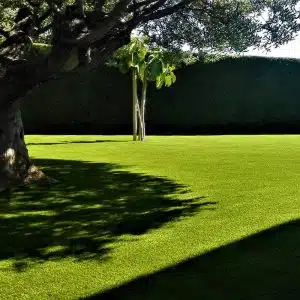
Artificial Grass for Shaded Areas: A Lasting Fix for Courtyards and Under-Tree Spaces
Every garden has one troublesome corner. It sits beneath a large tree or inside a walled courtyard. The lawn there is thin, patchy and covered in moss. You have probably reseeded it more than once. Perhaps you tried feeding, raking and watering too. Yet the bare patches keep coming back. There is a lasting solution. Artificial grass for shaded areas stays green without sunlight, mowing or reseeding. In this guide, Turfgreen Group explains why natural lawns fail in shade. We also show how synthetic turf solves the problem.
Why Natural Lawns Struggle in Shade
Grass is a sun-loving plant. It uses light to make the energy it needs to grow. The Royal Horticultural Society says most turf grasses need four to six hours of sun daily. Without that light, the blades weaken and thin out. Shade also changes the conditions around the grass. Cool, damp air encourages moss and fungal disease. Weeds then move into the gaps that the grass leaves behind. Dense tree canopies make matters worse. The RHS explains that oak, beech and conifer trees can block up to 95 percent of summer sunlight. Very few lawns can survive that. Reseeding with shade-tolerant mixes can help in light shade. The University of Connecticut lists fescues among the better performers in low light. Even so, results in deep shade remain unreliable.
The Hidden Problem Under Trees
Light is only half the story. Tree roots compete with grass for water and nutrients. Mature trees often keep their feeder roots close to the surface. They drink up moisture before grass roots can reach it. Extension specialists at NC State University note that trees and lawns compete for the same resources. Mowing and heavy equipment can also compact the soil. Compacted soil drains poorly and starves roots of air. Surface roots create another headache. Purdue Extension publishes a guide on surface roots. It explains why they make growing healthy turf so difficult. Falling leaves add to the strain. They smother the grass and hold moisture against the soil. The result is more moss and more bare patches.
Why Shaded Courtyards Are Just as Tricky
Courtyards face a different set of challenges. Walls and buildings block sunlight for most of the day. Air movement is often poor, so moisture lingers long after rain. Drainage can also be a problem in enclosed spaces. Water pools, mud forms and the lawn turns soggy. Foot traffic is usually heavy too. Courtyards are living spaces. Children play there, pets run around and guests gather. Natural grass rarely recovers from that wear in low light. Paving alone can feel hard and cold. Gravel can be noisy and messy. Many owners want a soft, green surface instead.
Key Benefits of Artificial Grass for Shaded Areas
Synthetic turf does not rely on photosynthesis. Shade simply does not affect it. Here are the main benefits.
A Lush Green Look All Year
Artificial turf looks the same in deep shade as it does in full sun. There are no brown patches or bare soil. Your courtyard stays inviting through every season.
No Mud, Weeds or Persistent Moss
Quality turf sits on a compacted, free-draining base. A weed membrane adds extra protection. Mud and slippery moss patches become far less of a worry.
Minimal Maintenance
You never need to mow, feed, scarify or reseed. An occasional brush and rinse is enough. That saves many hours every month.
Water Savings
Natural lawns need irrigation during dry spells. Artificial grass needs none. This cuts your water bill and helps in areas with water restrictions.
A Soft, Safe Surface
Modern turf feels gentle underfoot. Foam underlays can add extra cushioning. It suits children, pets and older family members.
Can You Install Artificial Grass Under Trees?
Yes, you can. However, it needs extra care. Trees are living organisms, and their roots need air and water. Poor installation can harm them.
Respect the Root Zone
Arborists advise against heavy soil compaction and deep digging near trunks. The International Society of Arboriculture shares tree care guidance at TreesAreGood.org. Consult a certified arborist before working near a large or valuable tree.
Leave a Gap Around the Trunk
The RHS recommends a turf-free zone of about one metre around tree bases. Apply the same thinking to synthetic turf. Leave a ring of mulch or gravel around the trunk. This lets water and air reach the roots.
Use a Shallow, Permeable Base
Avoid deep excavation near roots. Use a thin, breathable base layer instead. Choose turf with perforated backing so rain passes through freely. That keeps the soil below healthy.
Work Around Surface Roots
Never cut major roots just to create a flat surface. Instead, shape the turf around them. Where large roots dominate, a mulched or planted feature often looks better.
Handle Leaf and Seed Drop
Trees shed leaves, seeds and sap. Artificial turf copes with this well. A soft brush or leaf blower clears debris quickly. Regular clearing stops organic matter building up.
How to Choose Turf for Shady Spaces
Not all synthetic grass performs equally. Low-light spaces need thoughtful choices.
Pile Height and Density
Medium pile heights of about 30 to 40 mm suit most courtyards. Dense stitching gives a fuller look. It also resists flattening in busy areas.
Colour and Texture
Shaded spaces can look dull and cool. Choose turf with several green tones and a brown thatch layer. Natural variation looks realistic even in dim light. Slightly brighter greens can lift a dark corner.
Drainage and Backing
Damp areas dry slowly, so drainage matters more in shade. Look for perforated backing with strong drainage rates. Pair it with a well-built sub-base.
UV Resistance
Even shaded areas receive some sun. Courtyards also get reflected light from walls and windows. Choose UV-stabilised yarn for lasting colour. You can read more about how synthetic turf is made on Wikipedia.
Pet-Friendly Options
If dogs use the space, choose turf that drains well and resists odours. Regular rinsing keeps everything fresh.
Installation Best Practice
A great product still needs a great installation. Professional installers follow a clear process. First, they assess light, drainage, levels and root positions. This shapes the whole plan. Next, they clear the area carefully. Old turf and debris come out without harming roots. Then they lay a permeable base of compacted crushed stone. Compaction is kept light near trees. A weed membrane goes on top to block weeds and slow moss. Finally, they cut and join the turf neatly and secure the edges. Sand or rubber infill is brushed in. This helps the blades stand upright. Good installation also protects your trees. That is why many property owners choose experienced professionals.
Maintaining Artificial Grass in Shade
Maintenance is simple, but shade needs a little extra attention. Damp areas can develop algae or moss on the surface over time. Brush the turf every few weeks to keep the fibres upright. Remove leaves and debris promptly. Rinse with clean water to wash away dust and pollen. If a green film appears, use a mild turf-safe cleaner. Avoid harsh chemicals that could damage fibres or nearby roots. Check that drainage stays clear each season. Pet owners should rinse waste areas regularly. A little routine care keeps your turf looking fresh for years.
Is Artificial Grass Worth the Investment?
Consider the true cost of a struggling lawn. Seed, fertiliser, moss killer, mowing and watering all add up. Repeated repairs quickly become expensive. Artificial grass costs more upfront. However, it needs very little upkeep afterwards. Quality turf often lasts a decade or more. A neat courtyard or tidy tree area also lifts kerb appeal. It creates a usable outdoor room that you can enjoy daily. Many owners find that value hard to beat.
Frequently Asked Questions
Will artificial grass harm my tree?
Not when installed correctly. Use a shallow, permeable base and leave space around the trunk. Always seek arborist advice for mature or valuable trees.
Does artificial grass get hot in shade?
Shade keeps synthetic turf much cooler than open sun. Courtyards with reflective walls may still warm up slightly. Choose heat-resistant yarns for extra comfort.
Will moss grow on artificial grass?
Moss struggles to take hold on a well-drained surface. Damp shade can still cause some growth. Regular brushing and cleaning prevents it.
Can I install it myself?
Small areas are possible for confident DIYers. Tree roots, drainage and levels make shaded sites harder. Professional installation usually gives better results.
Conclusion: Turn Your Problem Corner into a Green Retreat
Natural lawns were simply not made for deep shade. Low light, competing roots and damp air all work against them. Artificial grass for shaded areas removes those problems. It gives you a soft, tidy and green surface all year. With careful installation, it can also protect your trees. Ready to transform that problem corner? Contact Turfgreen Group today for expert advice and a tailored quote.